
Mongolia travel guide
Discover Mongolia with local experts
Nomads, the Gobi desert and the endless steppe
Mongolia
At a glance
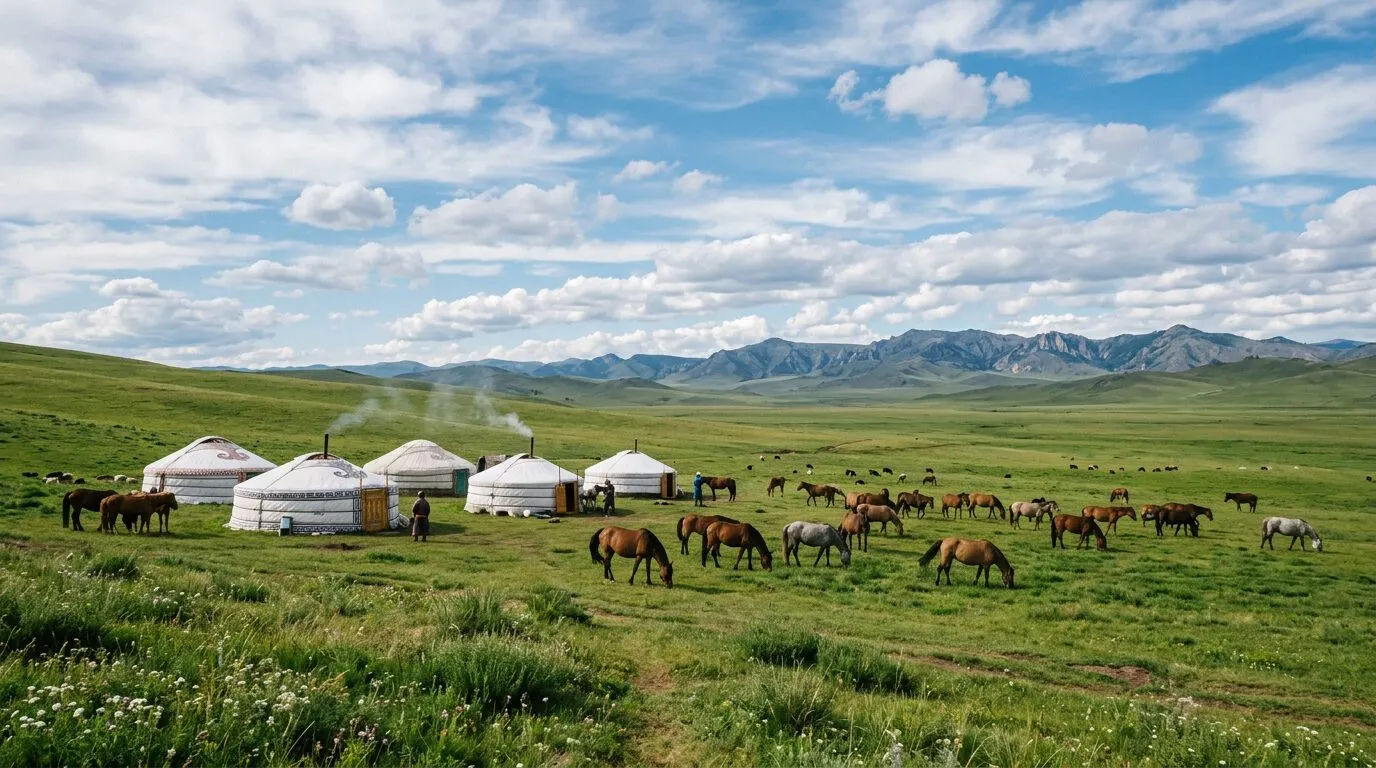
Mongolia is the land of the nomads: endless steppe, the dunes and canyons of the Gobi, the crystal-clear Lake Khövsgöl and the monasteries of Karakorum, the capital of Genghis Khan’s empire.
Staying in a ger with a nomad family, riding horses across open country, watching eagle hunters or the games of Naadam are experiences found nowhere else.
Seasons & weather: when to visit
- Spring · For the prepared
- Summer · Ideal
- Autumn · Good
- Winter · For the prepared
Spring
April – May
-5 to +15 °C, windy
Dusty winds and changeable weather, but also the season of newborn animals in the nomad camps and quiet roads.
For the prepared
Summer
June – August
15–30 °C, occasional rain
The best season for the steppe, the Gobi, Khövsgöl and Naadam on 11–15 July. Green landscapes and long days.
Ideal
Autumn
September – October
0–15 °C, clear and crisp
Golden steppe, fewer visitors and the Golden Eagle Festival in Bayan-Ölgii in early October.
Good
Winter
November – March
-30 to -10 °C
Extreme cold for adventurers: Tsagaan Sar, the camel festival in the Gobi and the ice festival on frozen Khövsgöl.
For the prepared
Regional climate notes
- Ulaanbaatar is the coldest capital in the world in winter.
- In the Gobi, days are hot and nights cold, even in summer.
Culture & traditions
Mongolian culture is nomadic and close to nature, mixing Tibetan Buddhism with older shamanic beliefs and a deep respect for horses, family and the land.
- Khöömei throat singing and the morin khuur horse-head fiddle (UNESCO).
- The ger, with clockwise movement and the place of honour opposite the door.
- The “three manly games”: wrestling, archery and horse racing.
- Kazakh eagle hunters in the far west.
- Buddhist monasteries such as Erdene Zuu and Gandan.
Festivals & holidays
Tsagaan Sar
When: January – February (lunar new year)
Where: Nationwide
The “White Month”: family visits, greetings to elders and mountains of buuz.
Thousand Camel Festival
When: March
Where: Gobi
Camel races, camel polo and nomad culture in the desert.
Naadam
When: 11–15 July
Where: Ulaanbaatar and every province
The national festival of wrestling, archery and horse racing (UNESCO).
Golden Eagle Festival
When: Early October
Where: Bayan-Ölgii
Kazakh eagle hunters on horseback compete with their golden eagles.
National cuisine
Mongolian food is based on meat and dairy, perfect fuel for a harsh climate; Ulaanbaatar also has a good international food scene.
Buuz
Steamed meat dumplings, the dish of Tsagaan Sar.
Khuushuur
Fried meat pastries, a favourite at Naadam.
Khorkhog
Mutton cooked in a milk can with hot stones, a nomad feast.
Tsuivan
Stir-fried noodles with meat and vegetables.
Suutei tsai
Salty milk tea offered in every ger.
Aaruul & airag
Dried curd and fermented mare’s milk of the summer pastures.
Practical tips from our team
- Distances are huge: domestic flights save days of driving.
- Bring warm layers all year round, even in summer.
- Cash is needed in the countryside; cards work in Ulaanbaatar.
- Book Naadam season (July) several months ahead.