
Azerbaijan travel guide
Discover Azerbaijan with local experts
The land of fire: Baku, Gobustan and Silk Road Sheki
Azerbaijan
At a glance
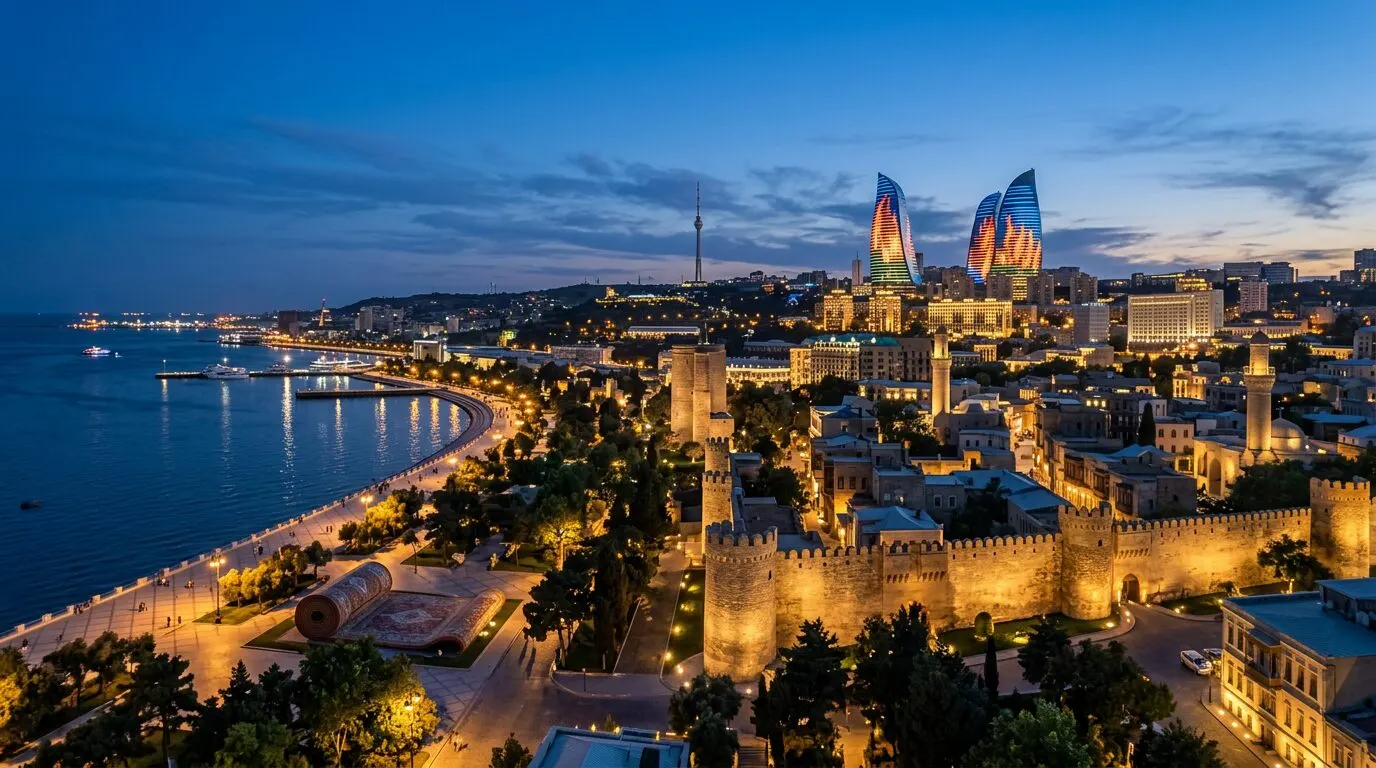
Azerbaijan, the “land of fire” on the Caspian Sea, combines the walled old city of Baku (Icherisheher) and its Maiden Tower with the futuristic Flame Towers and the Heydar Aliyev Centre.
Beyond the capital lie the rock art of Gobustan, the burning hill of Yanar Dag, the mud volcanoes and, in the green Caucasus foothills, Sheki with its Khan’s Palace and caravanserais, a perfect Silk Road town.
Seasons & weather: when to visit
- Spring · Ideal
- Summer · Good
- Autumn · Ideal
- Winter · For the prepared
Spring
April – June
15–27 °C, green and pleasant
Comfortable temperatures for Baku, Gobustan and Sheki; Novruz in March is the most festive time of the year.
Ideal
Summer
July – August
28–38 °C in Baku, cooler in the mountains
Hot in Baku and on the Absheron peninsula; Sheki, Gabala and the mountain villages of Khinalug are fresher.
Good
Autumn
September – November
15–25 °C, mild
Harvest time, the Baku Jazz Festival and the Goychay pomegranate festival; perfect for touring.
Ideal
Winter
December – March
0–10 °C, windy in Baku
Skiing in Shahdag, quiet museums and the cosy tea houses of the old city.
For the prepared
Regional climate notes
- Baku is nicknamed the “city of winds”: bring a windproof layer.
- The Greater Caucasus north of Sheki is much cooler and wetter than the coast.
Culture & traditions
Azerbaijani culture blends Turkic, Persian and Caucasian heritage. Music, carpets, poetry and tea are at its heart, and guests are welcomed with sweets and jam.
- Mugham, the improvised classical music recognised by UNESCO.
- Carpet weaving, displayed at the carpet-shaped National Carpet Museum in Baku.
- Tea culture with armudu pear-shaped glasses, jam and sweets.
- Shebeke stained-glass windows of Sheki.
- Novruz, the most important holiday, with bonfires and festive tables.
Festivals & holidays
Novruz
When: 20–24 March
Where: Nationwide
The main holiday: bonfires, samani wheat sprouts, sweets and celebrations over several days.
Independence Day
When: 28 May
Where: Nationwide
National celebrations marking the first republic of 1918.
Baku Jazz Festival
When: Autumn
Where: Baku
Concerts with Azerbaijani and international artists, blending jazz and mugham.
Goychay Pomegranate Festival
When: Late October – November
Where: Goychay
Pomegranate tastings, music, dancing and fairs in the pomegranate capital.
Ramazan & Gurban Bayrami
When: Eid al-Fitr and Eid al-Adha (lunar calendar)
Where: Nationwide
Public holidays shared with family, neighbours and those in need.
National cuisine
Azerbaijani food is refined and aromatic: saffron plov, fresh herbs, chestnuts, Caspian fish and sweets of almonds and walnuts.
Plov
Saffron rice with dried fruit, chestnuts and meat; dozens of regional versions.
Dolma
Vine leaves, cabbage and vegetables stuffed with meat and rice (UNESCO).
Qutab
Thin folded flatbreads filled with herbs, pumpkin or meat.
Lavangi
Fish or chicken stuffed with walnuts, onion and plum paste, from Lankaran.
Piti
Lamb and chickpea stew slow-cooked in a clay pot, the speciality of Sheki.
Pakhlava & shekerbura
Layered nut pastries and sweet half-moons, especially for Novruz.
Practical tips from our team
- Apply for the ASAN e-visa online before travel.
- Register with the migration service if you stay more than 15 days.
- Combine easily with Georgia; the land border with Armenia is closed.
- Baku cards and metro cards make city travel easy.