Endless steppes, the Gobi Desert and nomad hospitality
Mongolia
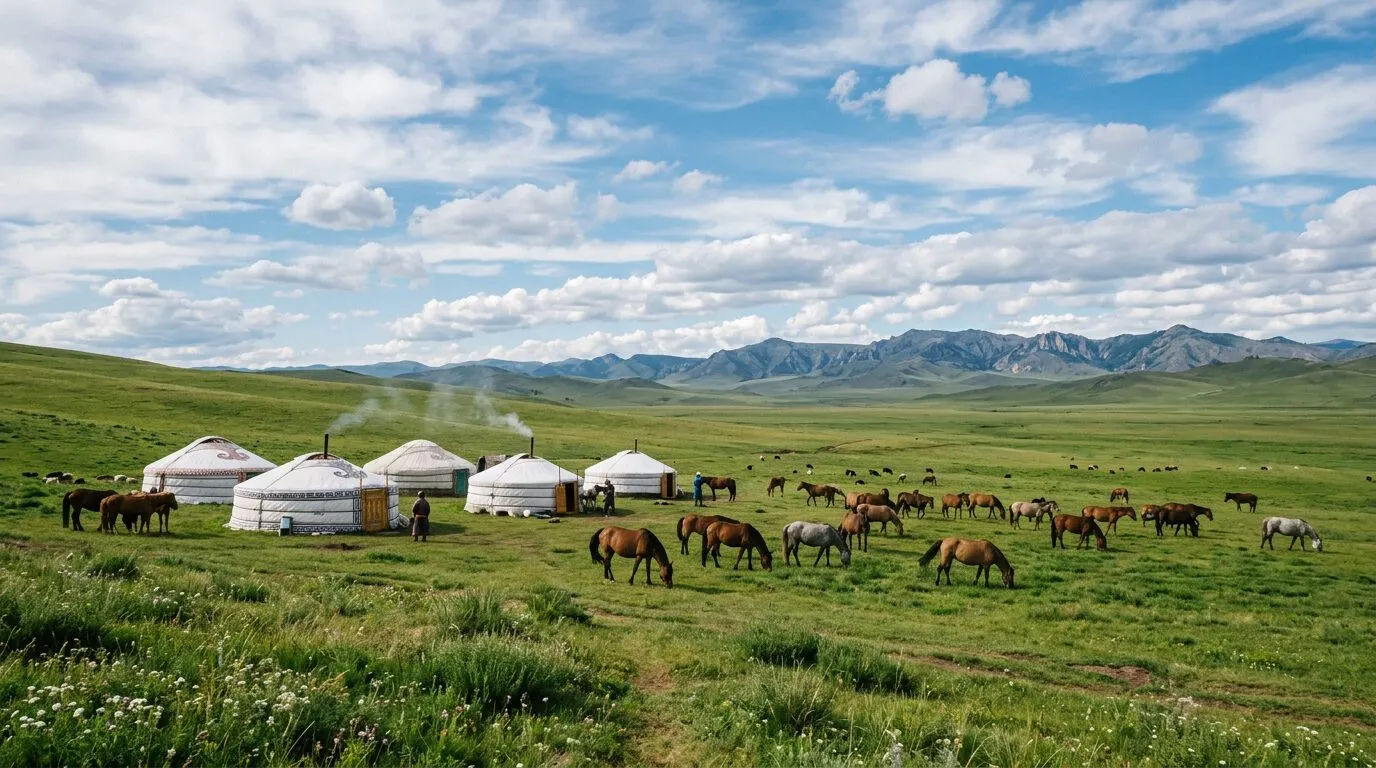
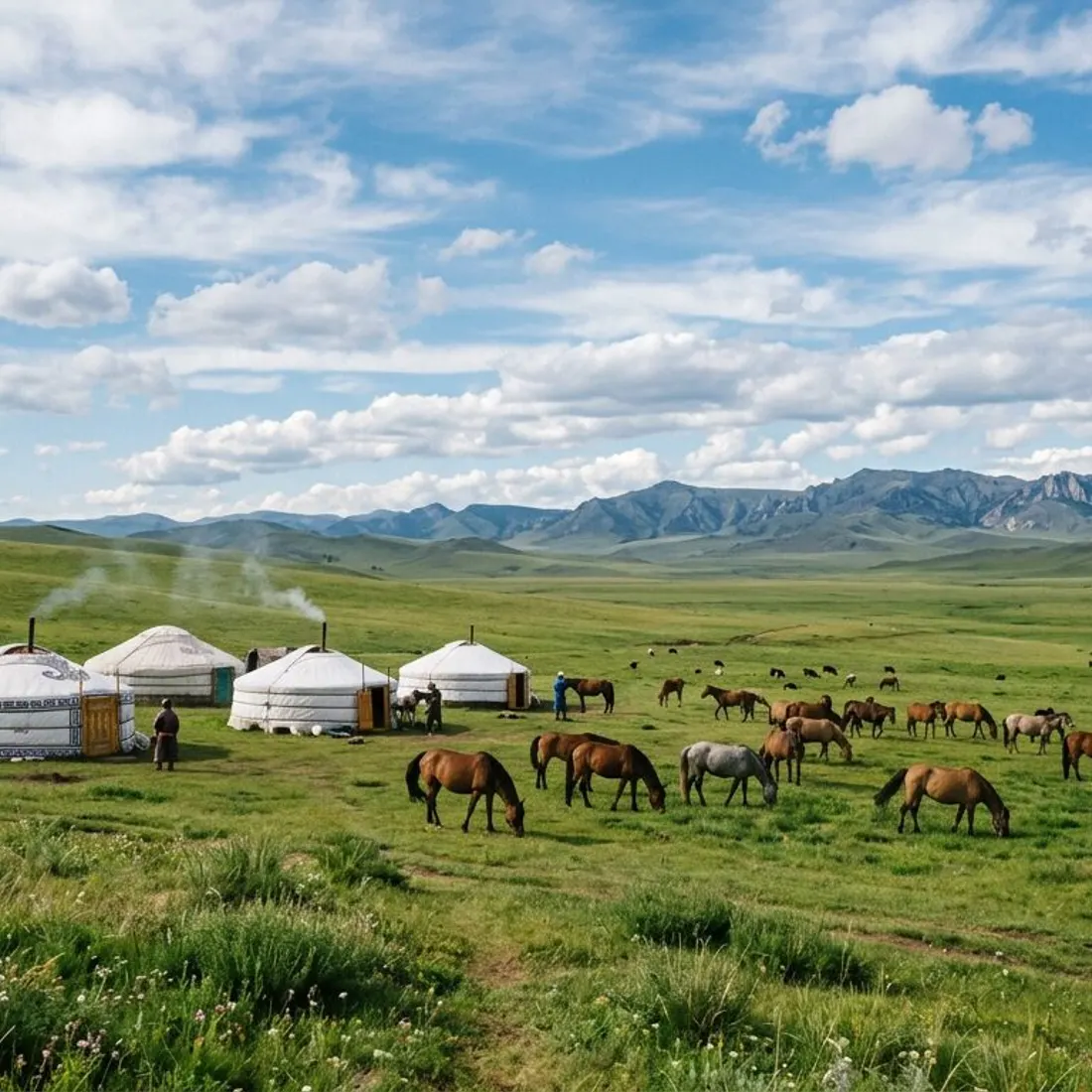
Mongolia is one of the last great open spaces on Earth: a land of rolling grasslands, red desert cliffs, crystal lakes and snow-capped Altai peaks, where roughly a third of the people still live a nomadic or semi-nomadic life.
Travelling here means sleeping in felt gers, riding sturdy Mongolian horses, sharing salty milk tea with herder families and watching the Milky Way rise over a silent horizon. With experienced drivers, guides and well-run ger camps, it is an adventure that is surprisingly comfortable.
Mongolia
History & culture
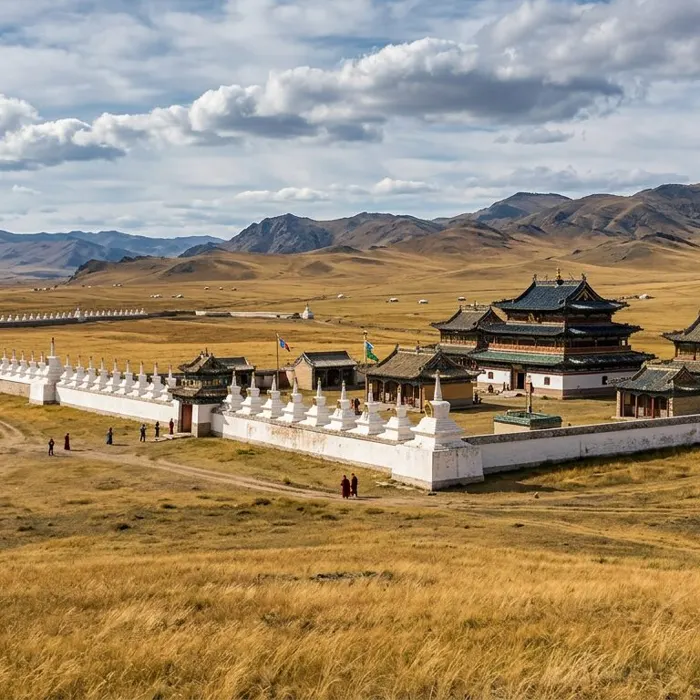
In 1206 Temüjin was proclaimed Chinggis Khaan (Genghis Khan) and united the steppe tribes into the Mongol Empire, which became the largest contiguous land empire in history, stretching from Korea to Hungary. Its capital, Karakorum, rose in the Orkhon Valley, a region already sacred to the Xiongnu, Turkic and Uyghur peoples before them.
Tibetan Buddhism took deep root from the 16th century, leaving monasteries such as Erdene Zuu and Amarbayasgalant. After centuries of Qing rule and seven decades as a socialist republic, Mongolia became a democracy in 1990. Today its culture lives on in the Naadam festival, throat singing (khöömei), the horse-head fiddle (morin khuur) and the traditions of herding families.
Mongolia
Key cities & iconic sights
Ulaanbaatar
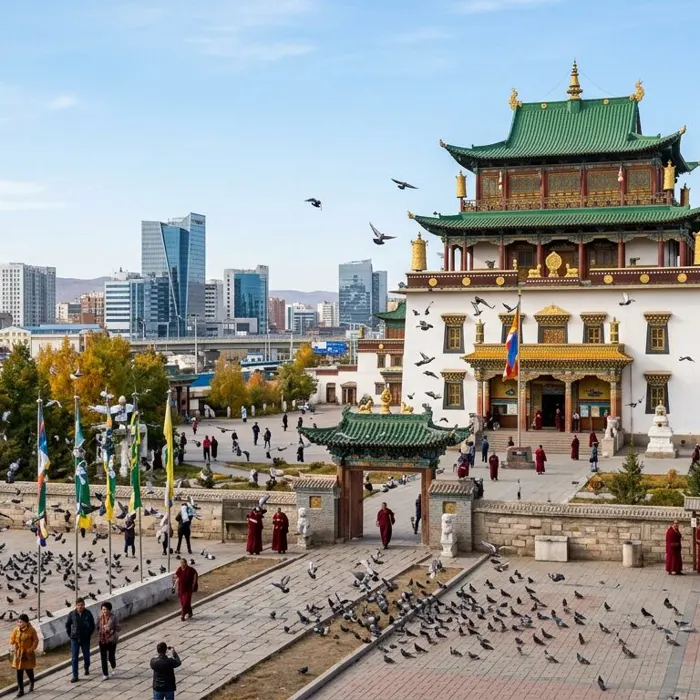
The lively capital: Gandan Monastery, the Chinggis Khaan Museum, Sükhbaatar Square, the Choijin Lama Temple, the Bogd Khan Winter Palace and an evening of throat singing and traditional dance.
Gobi Desert
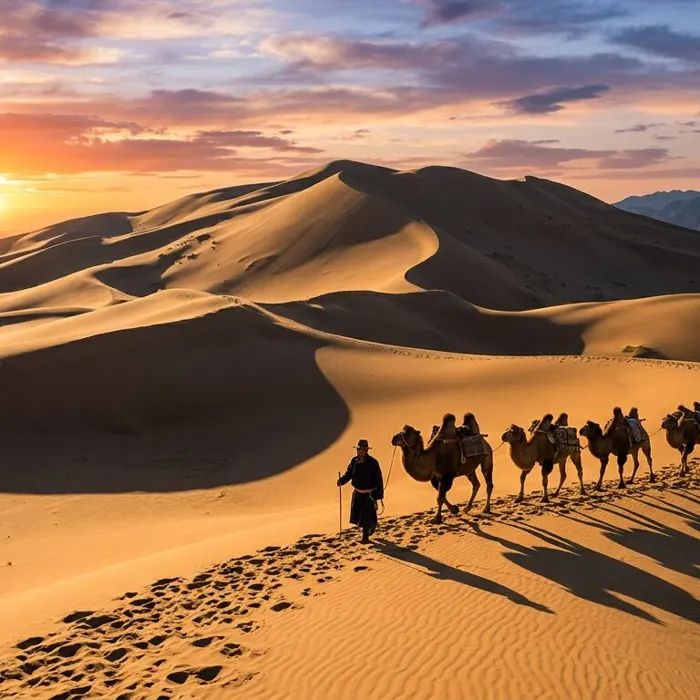
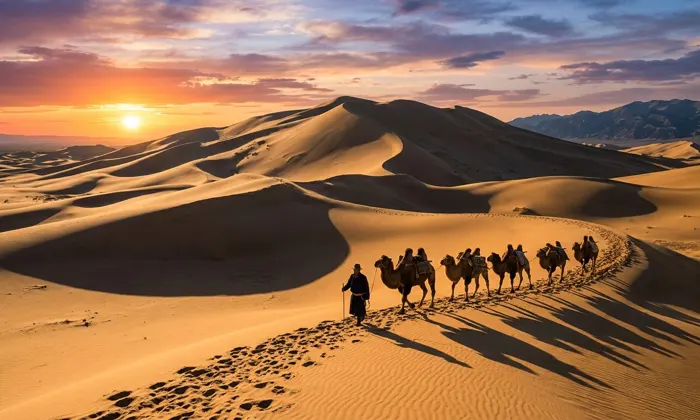
The singing dunes of Khongoryn Els, the Flaming Cliffs of Bayanzag where the first dinosaur eggs were found, and the ice-filled Yolyn Am gorge, with nights in a desert ger camp.
Orkhon Valley & Karakorum
The old imperial capital and Erdene Zuu, Mongolia’s first Buddhist monastery, with its 108 stupas, plus the Orkhon waterfall, Tövkhön hermitage and herders’ summer pastures.
Terelj National Park
Granite rock formations, larch forests and horse riding only 70 km from the capital, close to the giant equestrian statue of Chinggis Khaan at Tsonjin Boldog.
Lake Khövsgöl
The “Blue Pearl” of the north, a deep, clear alpine lake near the Siberian border, surrounded by taiga and home to reindeer-herding communities.
Khustai & Altai
Khustai National Park, where the wild Przewalski’s horse (takhi) was reintroduced, and the far-western Altai with its glaciers, petroglyphs and Kazakh eagle hunters.
UNESCO World Heritage
- Orkhon Valley Cultural Landscape (Karakorum and Erdene Zuu)
- Petroglyphic Complexes of the Mongolian Altai
- Great Burkhan Khaldun Mountain, sacred birthplace of Chinggis Khaan
- Uvs Nuur Basin and the Landscapes of Dauria
- Deer Stone Monuments, heart of Bronze Age culture
- Intangible heritage: Naadam, khöömei, morin khuur and the long song
Mongolia
Best seasons to visit
Spring (April – May)
Dry, windy and still cool, with dust storms in the Gobi; good for the Ulaanbaatar area and the eagle-hunter spring events in the west.
Summer (June – August)
Green steppes, warm days and cool nights: the main travel season. The national Naadam festival takes place on 11–13 July, with local Naadams throughout summer.
Autumn (September – October)
Golden larch forests, fewer visitors and crisp, clear skies; the Golden Eagle Festival in Bayan-Ölgii is held in late September or early October.
Winter (November – March)
Very cold (often below −25 °C), yet magical for the ice festival on frozen Lake Khövsgöl, camel festivals in the Gobi and staying with herding families.
Mongolia
Visa, entry & practical tips
- Most visitors fly into Chinggis Khaan International Airport (UBN) near Ulaanbaatar; the Trans-Mongolian Railway also links the capital with Beijing and Irkutsk.
- Your passport should be valid for at least six months. Visitors staying longer than 30 days must register with the Immigration Agency within 7 days of arrival.
- Distances are huge and many roads are unpaved: trips use comfortable 4x4 vehicles with experienced drivers, and domestic flights save time to the Gobi, Khövsgöl and the Altai.
- Cards work in Ulaanbaatar and larger towns; carry tögrög in cash for the countryside, markets and small purchases.
- Bring layers even in summer: nights can drop close to freezing, and the sun is strong at altitude. A headlamp and wet wipes are useful in ger camps.
- When visiting a ger, accept offered tea or snacks with your right hand, do not step on the threshold and move clockwise inside.
Mongolia
Cuisine & hospitality
Nomad cuisine is hearty and built around meat and dairy, created for long days in the saddle. Guests are always welcomed with salty milk tea and a bowl of dried curds, and ger camps and city restaurants readily prepare vegetarian meals on request.
- Buuz: steamed dumplings, the star of the Lunar New Year (Tsagaan Sar)
- Khuushuur: crispy fried meat pastries, a Naadam favourite
- Khorkhog: mutton cooked with hot stones in a sealed milk can
- Tsuivan: stir-fried hand-cut noodles with meat and vegetables
- Süütei tsai (milk tea), aaruul (dried curds) and öröm clotted cream
- Airag: lightly fermented mare’s milk, offered in summer
Mongolia
Tour highlights
Sample itineraries we run most often. Every tour is private and can be shortened, extended or combined with a neighbouring country.
 10 days
Classic Mongolia & the Gobi
Ulaanbaatar, the Flaming Cliffs, Khongoryn Els dunes and Yolyn Am, then Karakorum, Erdene Zuu and the Orkhon Valley, with nights in ger camps.
Request this tour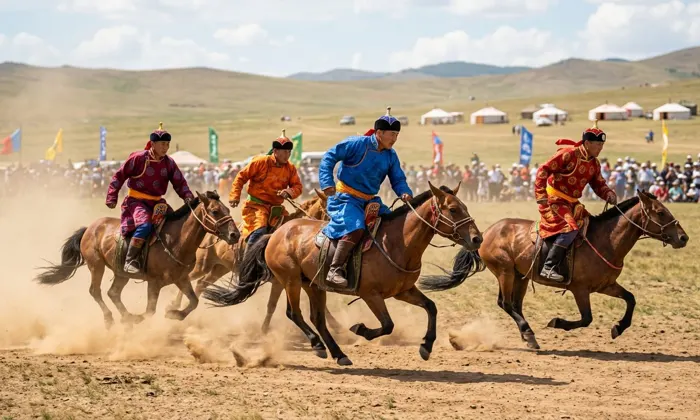 8 days
Naadam Festival Journey
The opening ceremony, wrestling, archery and horse racing of Naadam in Ulaanbaatar, plus Terelj, Khustai’s wild horses and a stay with a herding family.
Request this tour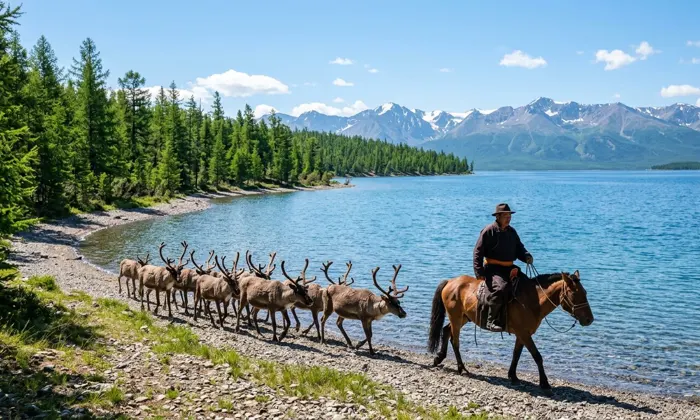 9 days
Lake Khövsgöl & the Northern Taiga
A domestic flight to Mörön, the shores of Lake Khövsgöl, horse and boat trips, reindeer herders, and Amarbayasgalant Monastery on the way back.
Request this tour
Mongolia
Mongolia: frequently asked questions
Eastern Asia / Steppes
Combine Mongolia with
Your Silk Road story starts here
Tell us when you would like to travel and what inspires you. We will design a journey that is entirely yours.