
Armenia travel guide
Discover Armenia with local experts
Ancient monasteries, Mount Ararat views and the oldest wine culture
Armenia
At a glance
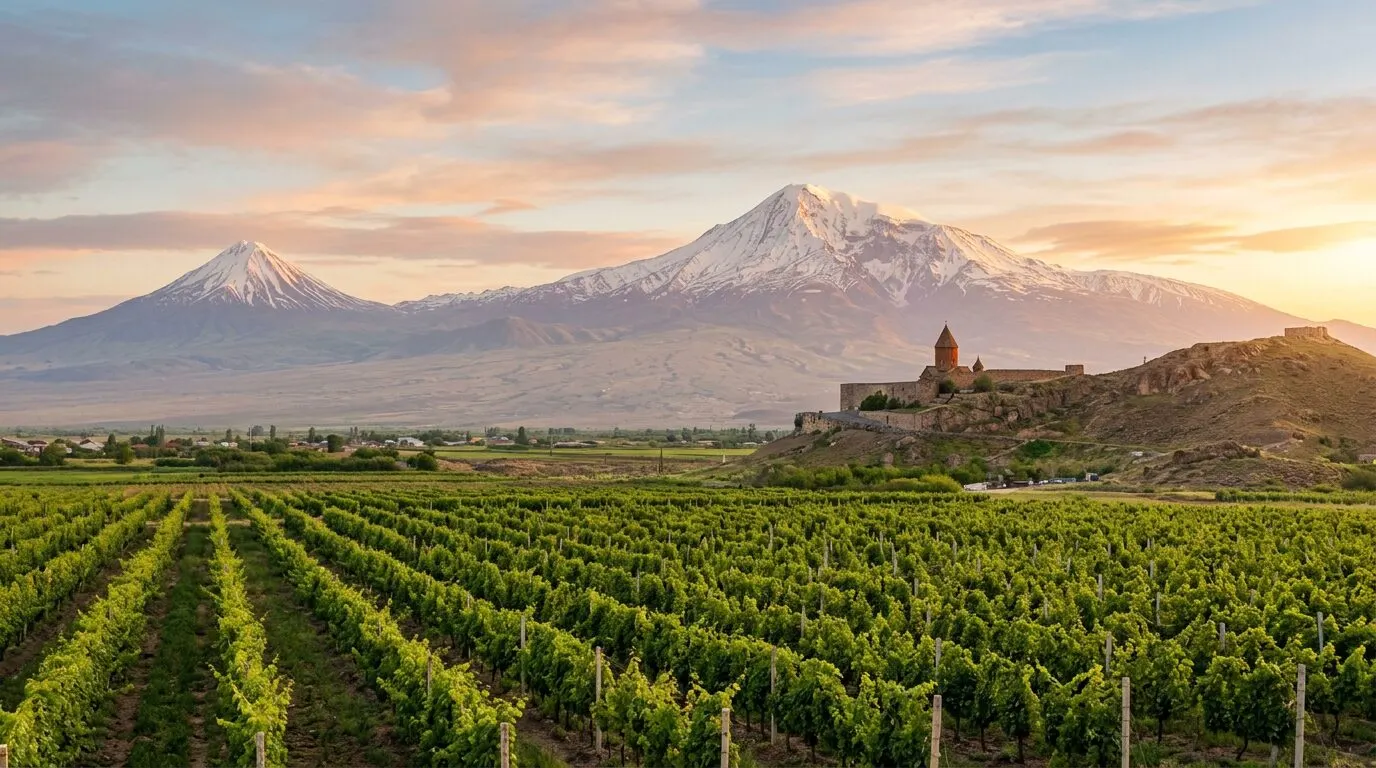
Armenia, the first nation to adopt Christianity as a state religion in 301, is a country of cliff-top monasteries such as Geghard, Tatev and Noravank, with the snowy cone of Mount Ararat on the horizon.
Yerevan, built of rose-coloured tuff stone, is a lively capital of cafés, museums and the Matenadaran manuscript library. Beyond it lie Lake Sevan, the forests of Dilijan and the vineyards of Areni, where archaeologists found the oldest known winery in the world.
Seasons & weather: when to visit
- Spring · Ideal
- Summer · Good
- Autumn · Ideal
- Winter · For the prepared
Spring
April – June
15–27 °C, green and flowery
Apricot orchards in bloom, green mountains, wild flowers around the monasteries and the clearest views of Ararat. Ideal for touring and hiking.
Ideal
Summer
July – August
30–40 °C in Yerevan, 20–28 °C in the mountains
Hot in Yerevan and the Ararat valley, so we head for Lake Sevan, Dilijan and the Syunik highlands. Vardavar, the water festival, falls in July.
Good
Autumn
September – October
15–28 °C, dry and golden
Grape harvest, the Areni wine festival, golden forests in Dilijan and Tatev and pleasant days for walking.
Ideal
Winter
November – March
-10 to +5 °C, snowy in the mountains
Skiing in Tsaghkadzor, snow-covered monasteries, Christmas on 6 January and quiet museums in Yerevan.
For the prepared
Regional climate notes
- Lake Sevan lies at about 1,900 m and stays fresh even in midsummer.
- The south (Syunik, Tatev) has mountain weather; roads may be snowy in winter.
Culture & traditions
Armenian culture centres on the Apostolic Church, the family and the arts, written in a unique alphabet created by Mesrop Mashtots in 405. Hospitality is generous and meals often turn into long toasts.
- Khachkars, intricately carved cross-stones, recognised by UNESCO.
- Duduk music, played on the apricot-wood flute (UNESCO).
- Lavash, the thin bread baked in the tonir oven (UNESCO).
- Ancient manuscripts in the Matenadaran and medieval miniature painting.
- Toasts, family feasts and coffee read in the cup.
Festivals & holidays
Armenian Christmas
When: 6 January
Where: Nationwide
Christmas Eve services and family dinners; Armenia celebrates Christmas together with Epiphany.
Trndez
When: 13–14 February
Where: Nationwide
An ancient festival of fire when young couples jump over bonfires for luck.
Vardavar
When: July (14 weeks after Easter)
Where: Nationwide
A joyful water festival when everyone splashes each other in the streets; join in or stay in the car.
Independence Day
When: 21 September
Where: Nationwide
National celebrations and concerts in Republic Square in Yerevan.
Areni Wine Festival
When: Early October
Where: Areni village, Vayots Dzor
Tastings of local wines, folk music and dancing in the land of the oldest known winery.
National cuisine
Armenian cooking is full of herbs, vegetables, grilled meats and superb fruit, with apricots, pomegranates, wine and brandy among the national pride.
Khorovats
Armenian barbecue of pork, lamb, chicken or vegetables grilled over vine wood.
Dolma
Vine or cabbage leaves stuffed with meat and rice, with garlic yoghurt.
Lavash
Thin flatbread baked against the walls of the tonir oven.
Ishkhan trout
The prized “prince trout” of Lake Sevan, grilled or baked.
Khash
A rich winter broth eaten early in the morning with garlic and dried lavash.
Gata
A sweet buttery bread, a speciality of the Geghard and Garni area.
Practical tips from our team
- Armenia combines easily with Georgia over the land border near Bagratashen.
- Dress modestly in churches and monasteries; women may cover their hair.
- Cards are widely accepted in Yerevan; carry cash for villages and markets.
- The border with Azerbaijan is closed; we route Caucasus trips via Georgia.